Acupuncture and Meridians – Introduction

Meridians or the meridian theory is one of the fundamental guiding theories of acupuncture, or Traditional Chinese Medicine.

Meridians are pathways and connections. As pathways, the energy – Qi, flows in them. As connections, they relate every part of the body: organs and organs, organs and the skin, the skin and muscles, etc. as a whole. These two properties allows the energy – Qi to circulate within the whole body. An acupuncturist or a TCM practitioner often uses the flow of Qi to make diagnoses and determine which meridian and point to use. This is why for the same condition, such as headaches in Western medicine, acupuncture often has several different diagnoses. Sometimes the points for headache are on the top of the feet and the lateral side of the lower legs (migraines, Gallbladder meridian), sometimes the points are on the ankle and the nape(occipital headache, tension headache, Urinary Bladder meridian).


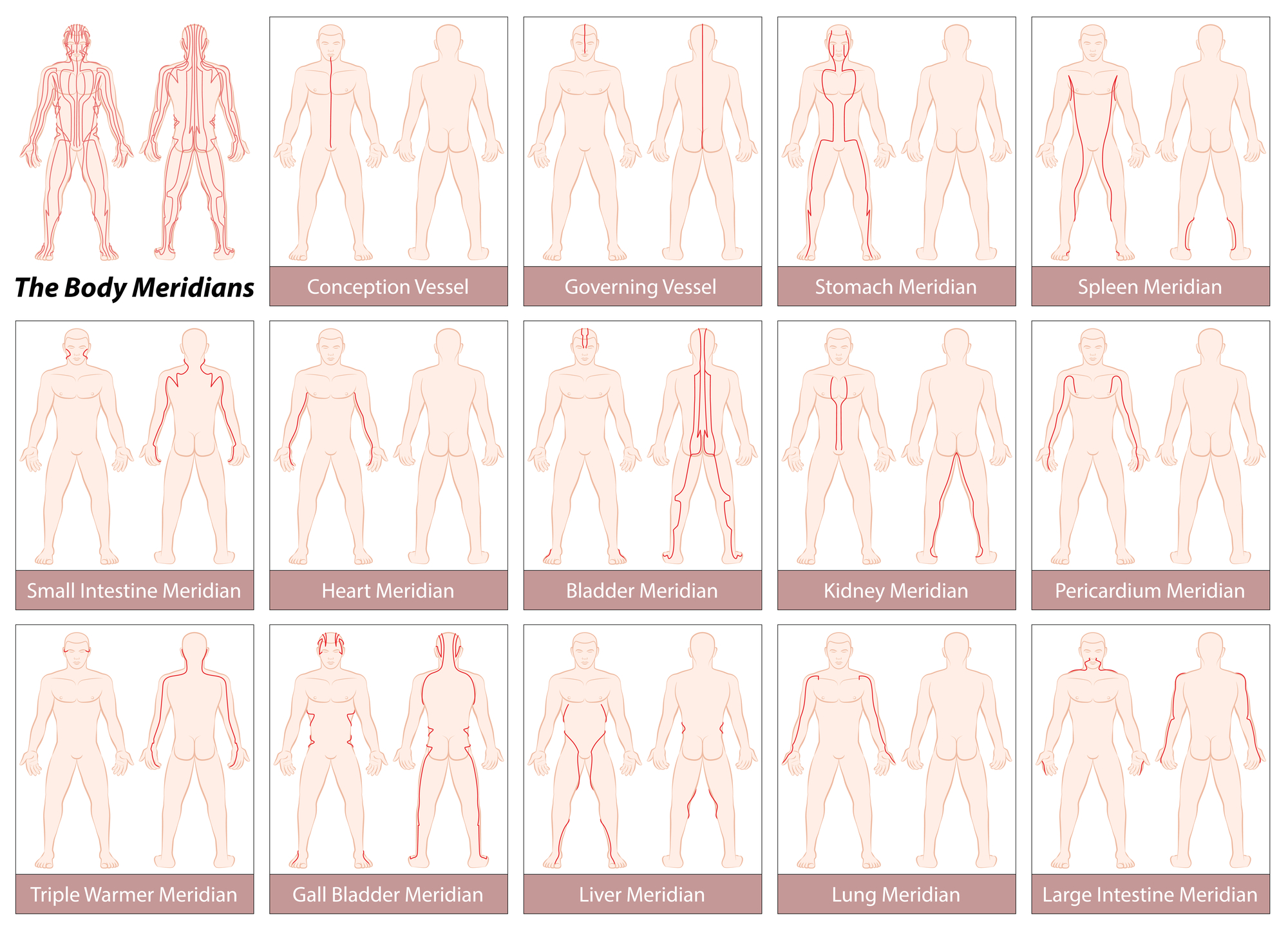
They are 14 major meridians. 12 of them represent 12 major organs – the Heart, the Lungs(as one), the Liver, the Gallbladder, the Kidneys(as one), the Urinary Bladder, the Large Intestines, the Small Intestines, the Stomach, the Spleen(it is named “spleen”, but it actually means the Pancreas), the pericardium and the Triple Burner(an imaginary organ, modern analyses of classic literature believe it is the trunk of the body).

The quantity of information that the meridian theory contains is tremendous, I will explain it with multiple blogs. Stay toned!

Yin & Yang Theory in Acupuncture
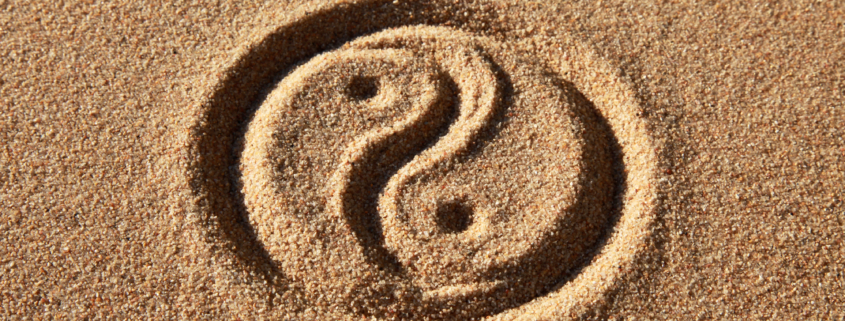
Yin Yang – Great ultimate
Yin & Yang theory is one of the fundamental building blocks of acupuncture.
According to this theory, Yin and Yang are the sole building blocks of the universe and everything it contains, including the human beings.

• Yin and Yang are interdependent
• Yin and Yang are opposite
• Yin and Yang are mutually consuming and supporting
• Yin and Yang transform into each other

Yang Yin
Light/Bright Sun Dark/Moon
Strong/Assertive Recessive/Nurturing
Dry/Hot/Fire Damp/Cool/Water
Male Female
Positive Charge Negative Charge
Heaven Earth
Spring & Summer Autumn & Winter

What acupuncture needs to do for Yin and Yang?
Since everything is built upon Yin and Yang, everything contains both Yin and Yang. There needs to be a balance and harmony between the two. For example, the heart’s Yin is what keeps us calm and the heart’s Yang is what keeps us energetic. When there is a lack of heart Yin due to too much heart Yang, a person may be hyped up all the time, and a lack of heart Yang could result in lethargy. With acupuncture, the point HT7(神门) on the heart meridian can be needled to tonify heart Yin, and the point UB15(心腧) can be needled to tonify heart Yang.

HT7 Shen Men, 神门   |   UB15 Xin Shu, 心腧


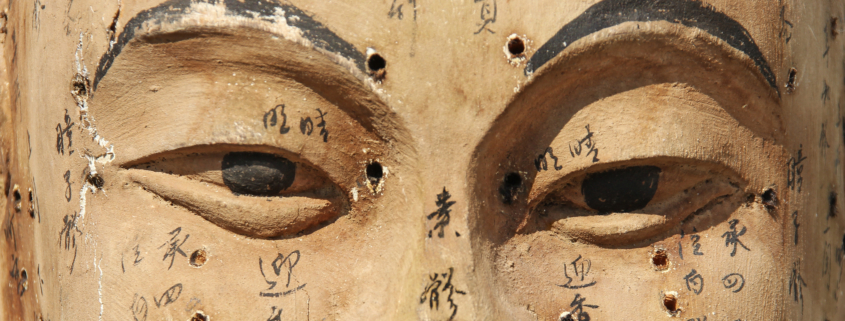
Acupuncture(针灸) is a major component of an ancient medical modality called Traditional Chinese Medicine (TCM, 中医). Its application is based on 3 TCM core concepts – the meridian theory, the Yin Yang theory and the 5 elements theory. TCM believes that there is an energetic force called Qi (气) that constantly flows in special pathways – the meridians(经络), when Qi is stuck, or something that causes Qi to stuck, there will be illness.

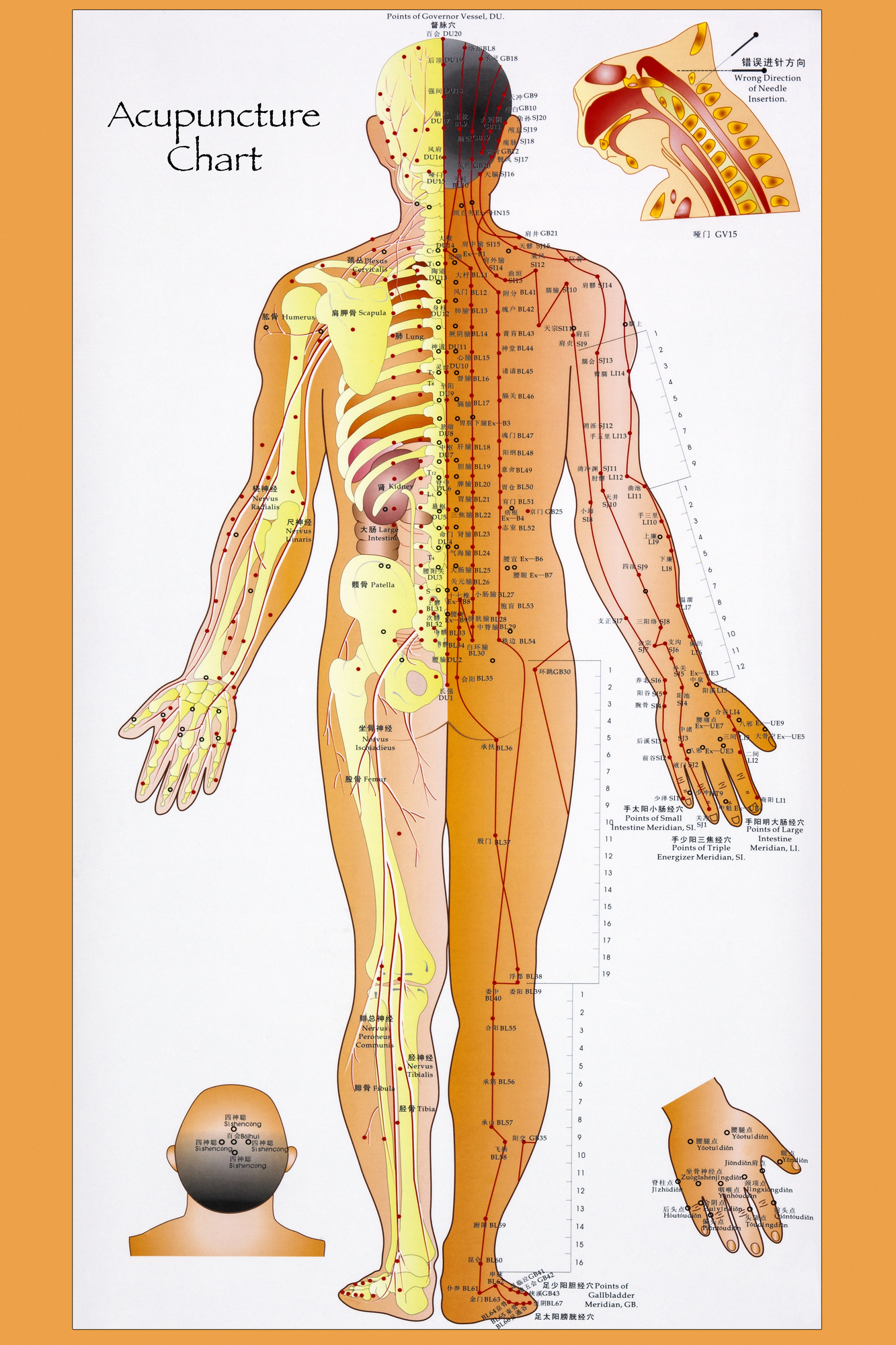
There are 14 major meridians, 6 on the left side of body, 6 on the right side of the body, and there is one in the middle on the front, and one in the middle on the back. Each meridian has a number of special spots called acupuncture points, total 654, each point has different therapeutical function(s), and acupuncturists need to remember every one of them!

Acupuncture, an ancient Chinese practice where needles are inserted into the body to treat disease, offers many benefits to seniors. While American healthcare is designed around Western medicine, alternative medicine — including acupuncture — provides relief without medication.

As the Baby Boomer population reaches retirement in record numbers, chronic health care expenses of this generation are feared to collapse Medicare. Not only that, the preventative medicine concept of Eastern medicine helps seniors get healthy naturally, without prescription side effects. Many believe acupuncture, and other alternative therapies, are the best-kept secret in senior care.

Here’s why:

1. Acupuncture Returns the Body to the State of Health

Chinese medicine and acupuncture are based on the concept of ‘qi’ (pronounced “chi”), which means ‘life force energy.’ This natural energy is continuously generated and flows within the twelve major meridians in the body. The two polarities referred to as ‘yin’ and ‘yang’ help balance the energy flow in each of the meridians to return the body to a good state of health. Pathogens can make these energies unbalanced, which leads to disease. Acupuncture helps treat disease by restoring and normalizing the flow and balance of the ‘qi’ in the meridians to return the body to a state of health.

2. There Are No Prescriptions in Acupuncture

Acupuncture enables relief without dealing with the side effects of medications for many conditions and symptoms. One of the biggest problems in Western Medicine is the use of prescription medication in the elderly. In fact, the CDC estimates that every year 177,000 older adults visit the emergency room due to medical problems. Dr. Leslie Kernisan, Geriatrician and A Place for Mom expert, comments:

“Most older adults will not have their medications regularly reviewed by a geriatrician or geriatric pharmacist, so many oversights and problems can arise. The more medications a senior takes, the greater the chance of side-effects, interactions, and emergencies due to adverse events.”

If natural remedies can be used, such as acupuncture, they are a wonderful alternative to medications.

3. Acupuncture Benefits the Respiratory System

The World Health Organization (WHO) has reported many health benefits from acupuncture.

These upper respiratory tract illnesses have shown to benefit from acupuncture:

  • Acute Rhinitis
  • Acute Sinusitis
  • Acute Tonsillitis
  • Common Cold & Flu

These respiratory illnesses have shown relief from acupuncture treatments.

4. Acupuncture Helps Treat Eye Disorders

The WHO reports relief from the following eye disorders, which are quite common in the elderly:

  • Acute Conjunctivitis
  • Cataracts
  • Central Retinitis Myopia

For benefits 5-7, please click HERE.


AUTHOR 
Dana Larsen

LINK TO ORIGINAL SITE
minnesota acupuncture

It is easy to ridicule a 2000-year-old treatment that can seem closer to magic than to science. Indeed, from the 1970s to around 2005, the skeptic’s point of view was understandable, because the scientific evidence to show that acupuncture worked, and why, was weak, and clinical trials were small and of poor quality.

But things have changed since then. A lot.

Thanks to the development of valid placebo controls (for example, a retractable “sham” device that looks like an acupuncture needle but does not penetrate the skin), and the publication of several large and well-designed clinical trials in the last decade, we have the start of a solid foundation for truly understanding the effectiveness of acupuncture.

How do we know if acupuncture really works for pain?

Individual large-scale clinical studies have consistently demonstrated that acupuncture provided better pain relief compared with usual care. However, most studies also showed little difference between real and sham (fake) acupuncture. In order to address this concern, a 2012 meta-analysis combined data from roughly 18,000 individual patients in 23 high-quality randomized controlled trials of acupuncture for common pain conditions. This analysis conclusively demonstrated that acupuncture is superior to sham for low back pain, headache, and osteoarthritis, and improvements were seen were similar to that of other widely used non-opiate pain relievers.

And the safety profile of acupuncture is excellent, with very few adverse events when performed by a trained practitioner. Meanwhile, basic science studies of acupuncture involving animals and humans have shown other potential benefits, from lowering blood pressure to long-lasting improvements in brain function. More broadly, acupuncture research has resulted in a number of insights and advances in biomedicine, with applications beyond the field of acupuncture itself.

Is acupuncture really that good?

We understand why there may be continued skepticism about acupuncture. There has been ambiguity in the language acupuncture researchers employ to describe acupuncture treatments, and confusion surrounding the ancient concept of acupuncture points and meridians, which is central to the practice of acupuncture. Indeed, the question of whether acupuncture points actually “exist” has been largely avoided by the acupuncture research community, even though acupuncture point terminology continues to be used in research studies. So, it is fair to say that acupuncture researchers have contributed to doubts about acupuncture, and a concerted effort is needed to resolve this issue. Nevertheless, the practice of acupuncture has emerged as an important nondrug option that can help chronic pain patients avoid the use of potentially harmful medications, especially opiates with their serious risk of substance use disorder.

Finding a balanced view

A post on acupuncture last year dismissed acupuncture as a costly, ineffective, and dangerous treatment for a headache. This prompted us to point out the need for a measured and balanced view of the existing evidence, particularly in comparison to other treatments. Although the responses that followed the article overwhelmingly supported acupuncture, it nevertheless remains a concern that this practice attracts this kind of attack. Acupuncture practitioners and researchers must take responsibility for addressing deficiencies in acupuncture’s knowledge base and clarifying its terminology.

That said, we need to recognize that acupuncture can be part of the solution to the immense problem of chronic pain and opiate addiction that is gripping our society. That this solution comes from an ancient practice with a theoretical foundation incompletely understood by modern science should make it even more interesting and worthy of our attention. Clinicians owe it to their patients to learn about alternative, nondrug treatments and to answer patients’ questions and concerns knowledgeably and respectfully.

You can read more about how acupuncture can help with chronic headaches HERE.


AUTHOR 
Helene Langevin, MD – Contributor
Carolyn A. Bernstein, MD, FAHS – Contributor

LINK TO ORIGINAL SITE
Most have heard about the amazing effects of acupuncture when it comes to chronic pain reduction and the improvement of life quality with various musculoskeletal disorders. This ancient healing method has a vast number of other physical, mental, and emotional benefits that not many individuals are familiar with. Some of these surprising benefits of acupuncture are the following:

  1. Mood Enhancement: Whether chronic stress, real-life worries, or imbalanced hormonal causes are behind your fluctuating mood and possible depression, acupuncture can offer significant relief. During and after the application of acupuncture needles, your central nervous system becomes stimulated and releases endorphins and other chemicals that lift your mood. The process helps you to think more positively and support your body to fight off the damaging effects of the state of prolonged anxiety.
  2. Headache Relief: The careful and exact placement of acupuncture needles near specific nerves have a wonderful pain-reductive effect. The endorphins released also support the feeling of the total loss of discomfort, leading to a breakthrough in your headaches and recurring migraines.
  3. Sleep Quality Improvement: Acupuncture increases your body’s natural ability to produce more melatonin. This hormone — when present in optimal amounts — regulates your sleep-wake cycles. Today, largely thanks to our modern lifestyle and poor sleep habits, it is often underproduced, leading to insomnia, frequent awakenings at night, or being exhausted all the time. If this is ongoing for a prolonged time, it is a breeding ground for other future health problems. Acupuncture will help restore your natural ability to fall — and remain — asleep easily, once again.
  4. Immune System Support: Our 21st century way of living challenges the immune system perhaps more than ever before in history. Since the immune system is our first line of bodily defense, its effective and optimal functioning is crucial. Acupuncture not only strengthens the immune system to fight back infections and other harmful threats to the organism, but it speeds up healing time as well. Another function of acupuncture is to balance the immune function that, when overactive, could lead to the development of various autoimmune diseases.
  5. Energy Boost: Whether you are in need of a physical or mental energy boost to combat fatigue, acupuncture can offer tremendous benefits in fighting off exhaustion or brain fog. By thoroughly balancing the body’s energetic field, an optimal set-point can be reached and all organs can function correctly. As a result, you can experience a state of ease that allows for better quality of rest and becoming pain-free. Stimulating the appropriate neural pathways leads to increased physical stamina and capacity for clear and productive thinking.

To read on benefits 6-10, click HERE.


AUTHOR 
Andrew Castellanos, L.Ac.
Licensed acupuncturist with a Masters Degree in Traditional Chinese Medicine from AIMC in Berkeley.

LINK TO ORIGINAL SITE