What Is Acupuncture? (3)
Acupuncture and Meridians – Introduction
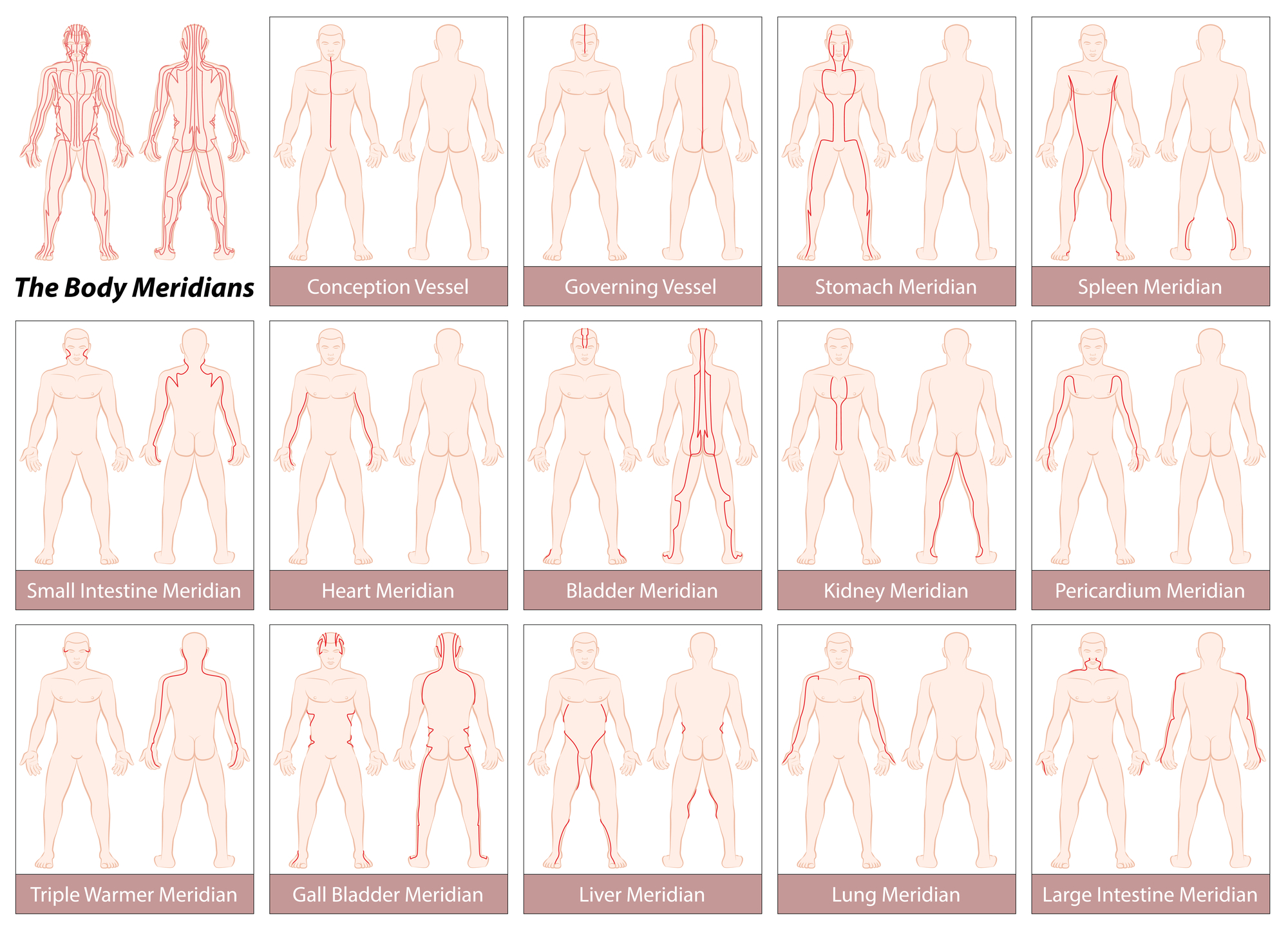
Meridians or the meridian theory is one of the fundamental guiding theories of acupuncture, or Traditional Chinese Medicine.
Meridians are pathways and connections. As pathways, the energy – Qi, flows in them. As connections, they relate every part of the body: organs and organs, organs and the skin, the skin and muscles, etc. as a whole. These two properties allows the energy – Qi to circulate within the whole body. An acupuncturist or a TCM practitioner often uses the flow of Qi to make diagnoses and determine which meridian and point to use. This is why for the same condition, such as headaches in Western medicine, acupuncture often has several different diagnoses. Sometimes the points for headache are on the top of the feet and the lateral side of the lower legs (migraines, Gallbladder meridian), sometimes the points are on the ankle and the nape(occipital headache, tension headache, Urinary Bladder meridian).
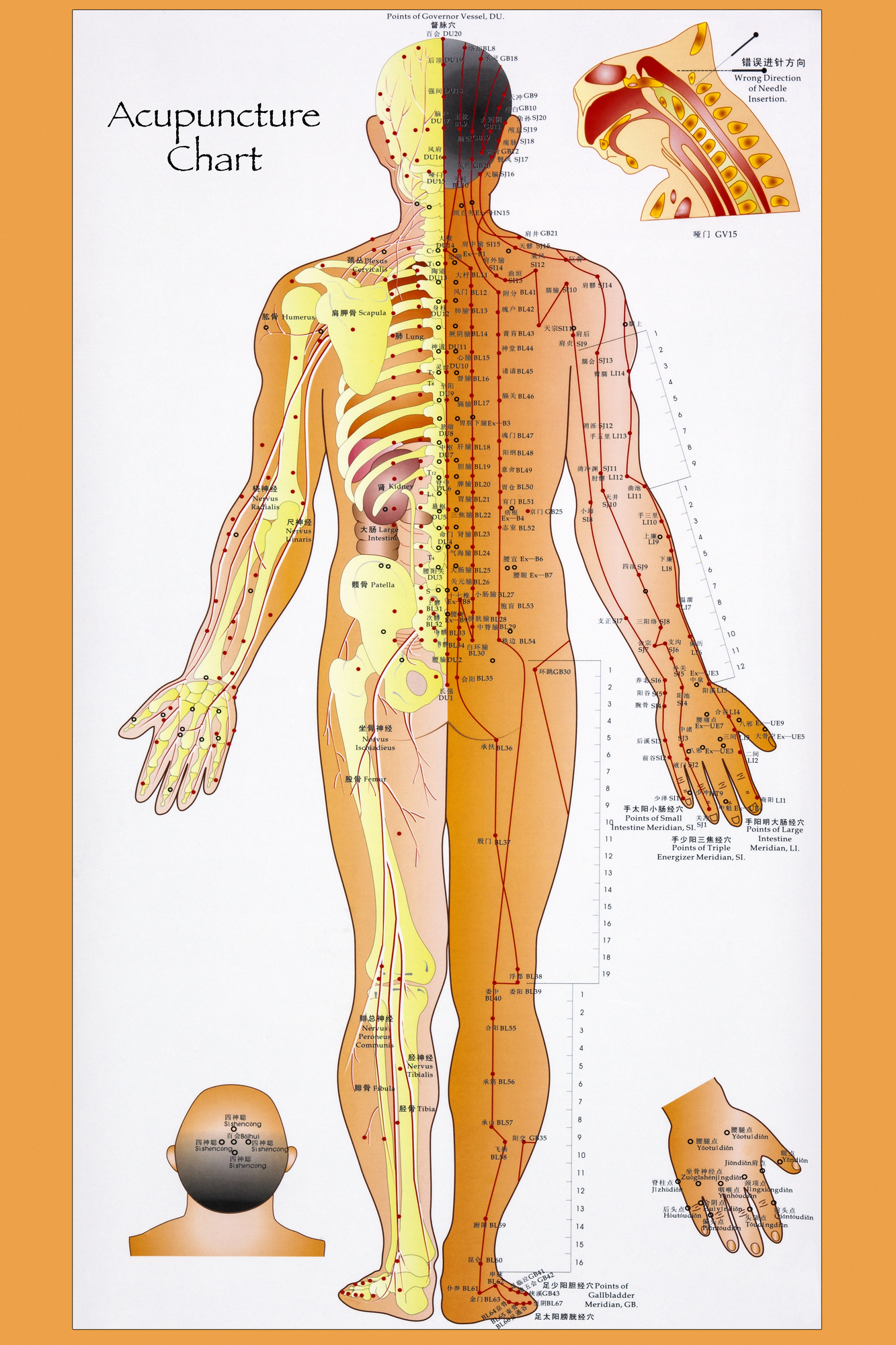
The quantity of information that the meridian theory contains is tremendous, I will explain it with multiple blogs. Stay toned!


